
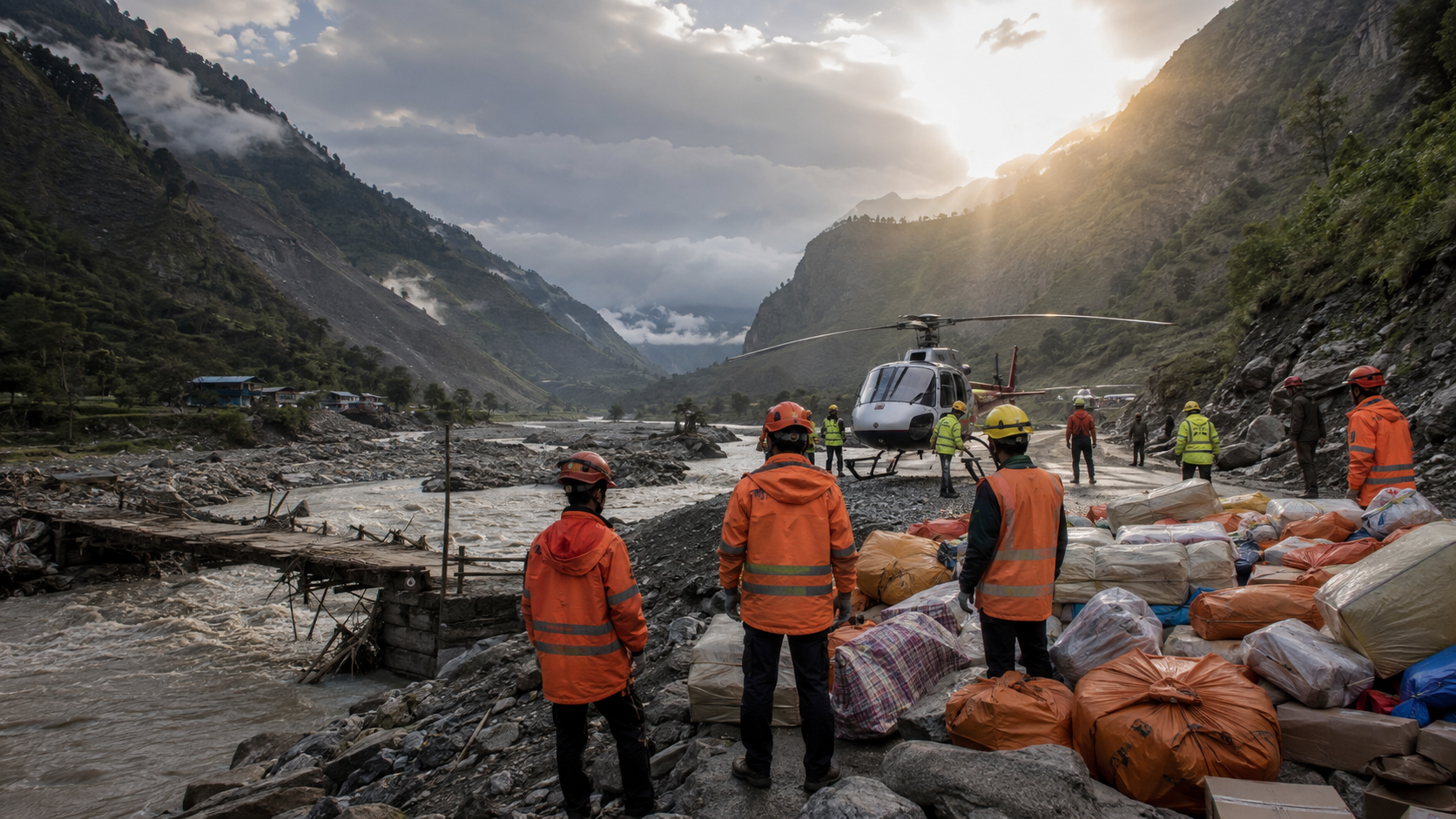
Nepal Floods: A Nation Searches, Rescues and Mourns
Ten days after the August 26 Bhote Koshi River disaster, Nepal is still searching for survivors through mud, broken roads and flooded hydropower tunnels. Nepal's disaster agency reports at least 1,287 dead and more than 5,000 missing. Nepal's government says 13,093 people—including more than 300 foreign nationals—have been rescued.
Rescue work is still finding life
On September 4, crews rescued two hydropower workers from the Trishuli 3A tunnel after they had been trapped for nine days. They were flown to a Kathmandu hospital; one was reported in critical condition. One survivor told officials that more people were alive inside, renewing hope as Nepali teams and specialists from India, China and South Korea continued searching multiple tunnel systems.
Authorities say roughly 900 workers are missing from 12 hydropower projects, with about 500 believed trapped in tunnels. Flooding and landslides destroyed roads, bridges, homes and water systems across Rasuwa, Nuwakot, Dhading and downstream districts. The government estimates at least 387.5 billion Nepalese rupees—about $2.5 billion—in damage.
Extreme weather—and a secondary disease threat
This event belongs first in extreme weather and disaster coverage. Reports indicate the flash flood was likely triggered by a glacier collapse and landslide near the Nepal–Tibet border, while continuing monsoon rain, unstable slopes and blocked waterways have kept rescue conditions dangerous.
A flood is not itself pestilence. In biblical language, pestilence refers to widespread deadly disease. The categories can overlap afterward, however: the World Health Organization warns that displacement, overcrowding and stagnant water can increase outbreaks. Health teams are monitoring for dengue, scrub typhus and other communicable diseases while safe water and sanitation remain disrupted.
Birth pangs should awaken mercy, not sensationalism
Jesus described wars, famines, pestilences, earthquakes and fearful sights as the beginning of sorrows. Paul likewise pictured creation groaning and travailing in pain. Christians may recognize that pattern while remaining humble about any single disaster: Scripture does not permit us to turn a family's grief into a date-setting device.
Watchfulness should look like truth, prayer and practical love. Verify changing casualty numbers, listen to local authorities, give through accountable responders and remember that every number represents a person known and loved by God.
A prayer for Nepal
Father of mercies, draw near to the people of Nepal. Comfort every family mourning someone lost and sustain those waiting for news of the missing. Protect the trapped, strengthen rescue workers and medical teams, and give wisdom to leaders coordinating help across damaged roads and remote valleys.
Provide shelter, clean water, food and medicine for every displaced family. Guard communities from further floods, landslides and disease. Bring healing to the injured, peace to the traumatized and endurance to those rebuilding their homes and livelihoods. Move Your people to give generously, serve humbly and speak hope without exploiting sorrow. In Jesus' name, amen.
Watch: The rescue and humanitarian response
Help Nepal's flood survivors
These organizations are already supporting the response. Donation pages can change, so confirm that your gift is designated for Nepal flood relief before completing it.
Sources & further reading
Editorial note: Documented news and measurements above are linked to their sources. Prophetic interpretation is commentary, not a claim that a specific future date or fulfillment can be proven from a headline.
← Back to all posts